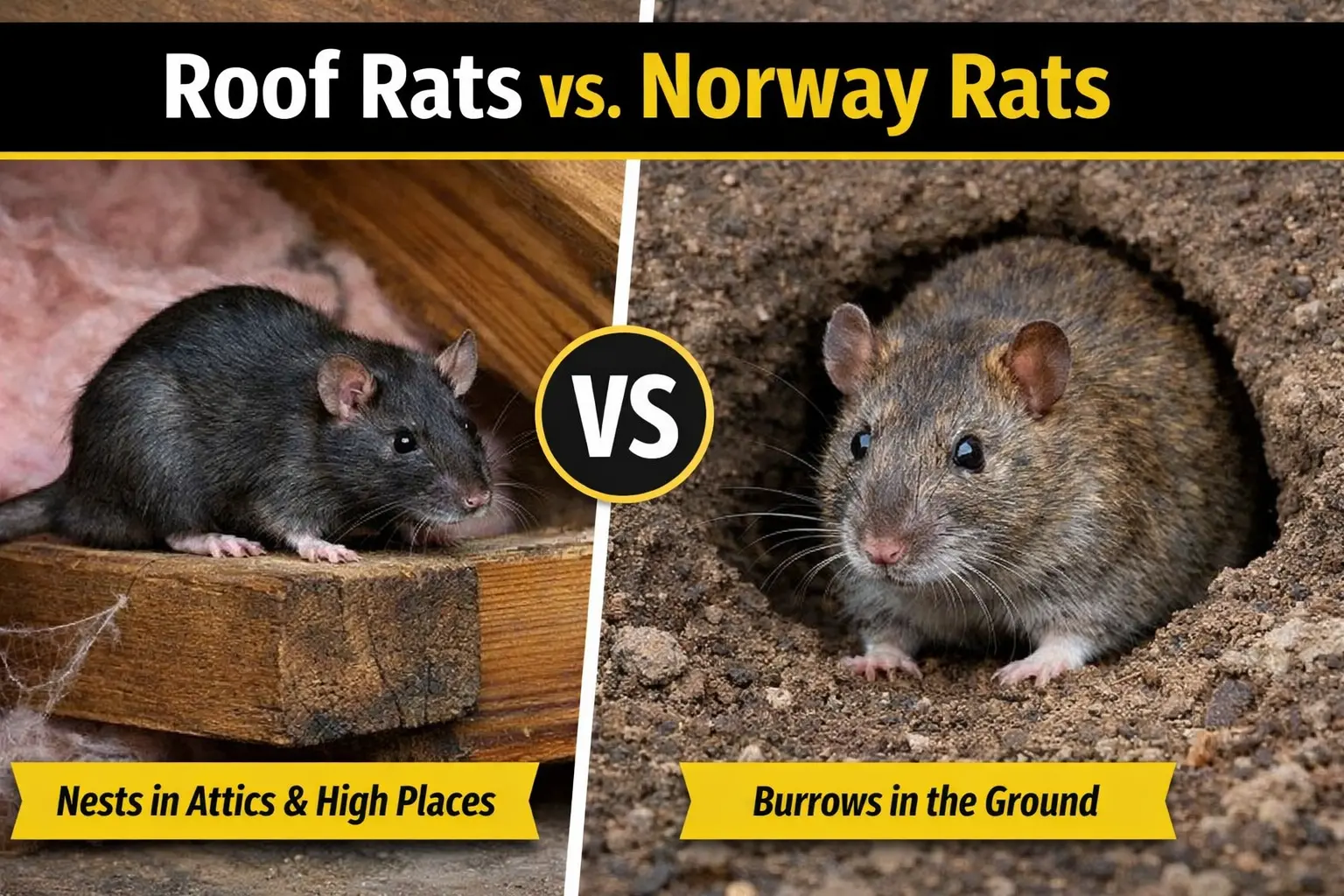
The Difference Between Rat Species in Norman: Roof Rats vs. Norway Rats
When it comes to rat infestations, understanding the type of rat you’re dealing with is crucial for effective control. In Norman, the two most common rat species homeowners and businesses face are Roof Rats and Norway Rats. Each species behaves differently, has distinct physical traits, and requires unique control strategies. By knowing how to identify these pests, you can take the proper steps to protect your property.
Overview of Rat Species in Norman
Rats are a persistent problem in many parts of the world, and Norman is no exception. While both Roof Rats and Norway Rats are invasive species in our area, they each have their own habits and traits that make them unique. Understanding these differences is key to tackling an infestation effectively. Identifying the rat species helps homeowners and business owners apply the right strategies for prevention and eradication.
Roof Rats: The Agile Climbers
Physical Characteristics
Roof Rats, also known as black rats, are smaller, more slender rats. Typically, they have dark fur with a sleek appearance, and their long tails are almost as long as their bodies. Roof Rats typically measure between 7 to 10 inches in body length, with tails extending beyond their bodies.
Behavior and Habitat
These rats are excellent climbers and prefer nesting in elevated areas. You’ll often find them in attics, rafters, or even the trees around your home. Roof Rats are particularly drawn to homes with easy access to high places, such as overgrown trees that connect to the roof.
Diet and Activity
Roof Rats are mostly nocturnal and prefer to forage at night. They tend to feed on fruits, vegetables, nuts, and seeds, but will also scavenge for food scraps if needed. Their preference for climbing allows them to access food sources in attics or higher places, which makes them tricky to catch without the proper tools and techniques.
Common Signs of Roof Rat Infestation
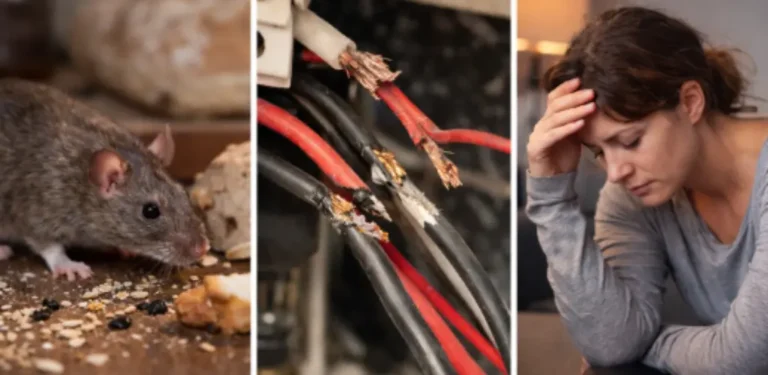
The most common signs of a Roof Rat infestation include droppings found in high areas, gnaw marks on beams, and noises coming from the attic during the night. If you notice damage to insulation or wiring in your attic, this could also be an indication of Roof Rat activity.
Control Tips for Roof Rats
Effective control of Roof Rats involves sealing off any entry points at higher elevations. Trim tree branches that are close to your home and close off any gaps in your roof. It’s also essential to use traps in the high areas they frequent. Regular inspections of attics and roofs can prevent future infestations.
Norway Rats: The Ground Dwellers
Physical Characteristics
In contrast to Roof Rats, Norway Rats (also known as brown rats or sewer rats) are larger and stockier. They have shorter tails, measuring 6 to 8 inches, and their fur is typically brown or gray with a paler underside. These rats are bulkier in comparison and are built for burrowing.
Behavior and Habitat
Unlike Roof Rats, Norway Rats prefer living at ground level. They often burrow in the soil near the foundation of homes or other structures. Norway Rats are typically found in basements, crawl spaces, and sewers, where they have easy access to food and shelter. They are less likely to venture into higher places like attics.
Diet and Activity
Norway Rats are opportunistic feeders and are known to scavenge garbage, compost, and even pet food. They are more aggressive than Roof Rats and will often fight over territory. They are also nocturnal but are known to scavenge throughout the night, seeking out any food sources they can find.
Common Signs of Norway Rat Infestation
Signs of a Norway Rat infestation include burrows around the foundation of your home, gnawed holes in food packaging, and droppings near the ground or in dark, hidden areas. You may also hear scratching noises coming from lower levels, such as basements or crawl spaces.
Control Tips for Norway Rats
To control a Norway Rat infestation, it’s important to seal off any burrows near the foundation of your home. Close off gaps around pipes and vents that could serve as entry points. Traps are effective when placed near burrow holes or along walls where rats tend to travel. Keeping food stored in airtight containers and ensuring trash bins are sealed tightly will also help deter them.
Key Differences Between Roof Rats and Norway Rats
While both rats can cause damage and pose health risks, understanding their differences can help you take targeted actions to control the infestation.
- Size and Appearance: Roof Rats are smaller and more slender, while Norway Rats are bulkier with shorter tails.
- Habitat Preferences: Roof Rats prefer to nest in high places like attics and trees, whereas Norway Rats prefer burrowing on the ground or in basements.
- Diet: Roof Rats primarily eat fruits and seeds, while Norway Rats are more likely to scavenge through garbage.
- Reproduction Rates: Both species reproduce quickly, but the Norway Rat has a slightly higher reproduction rate due to its aggressive nature.
- Risk Factors: Roof Rats can cause damage to insulation and wiring, while Norway Rats are more likely to contaminate food supplies and spread diseases like leptospirosis.
How to Tell Which Rat Species You Have
Identifying the species is crucial in determining the best control methods. Here are a few quick tips to help you identify which species you may be dealing with:
- Roof Rats: If you notice rats in your attic, rafters, or trees, they are likely Roof Rats. They also tend to leave droppings in high places.
- Norway Rats: If you find rats around your foundation, basement, or burrows in the ground, you likely have Norway Rats. Their droppings are typically found near the ground, and they often leave visible signs of burrowing.
Choosing the Right Control Method for Each Species
When it comes to rat control, a one-size-fits-all approach won’t work. Roof Rats require exclusion techniques at elevated points, while Norway Rats need burrow control and ground-level inspections. Hiring a professional for proper identification and targeted treatment will ensure long-term results.
Why Professional Rat Control Services Are Essential
Rat control isn’t just about setting a few traps. Effective control requires knowledge of rat behavior, appropriate tools, and a comprehensive approach to both eradication and prevention. Professionals know exactly how to handle each species and can help safeguard your home or business from future infestations.
If you suspect you have a rat problem, don’t wait until it becomes a full-blown infestation. Contact a professional rat control service to inspect your property, identify the species, and implement the most effective solution.
Bottom Line
Understanding the differences between Roof Rats and Norway Rats is the first step in tackling a rat infestation in Norman. By identifying the species and applying the correct control methods, you can prevent damage to your home and reduce the health risks associated with these pests. If you’re dealing with a rat problem, don’t hesitate to reach out to a professional service that understands the unique challenges of rodent control in Norman.